The most powerful changes in teaching often start with a simple idea: what if we didn’t have to do everything alone? In large Computer Science programs, where multiple instructors teach the same course across different sections, keeping things aligned can feel like an ongoing engineering challenge. This article explores a collaborative Course Coordinator Cohort Model designed to bring faculty together around shared goals, shared tools, and shared clarity. The model strengthens consistency, reduces faculty workload, and makes space for the kind of innovation that directly benefits students.
One of the most transformative elements of the cohort model is the creation of a shared Digital Foundation. Many of us know the frustration of hunting for course materials created semesters ago or discovering that a colleague is using an entirely different version of an assignment. The Digital Foundation addresses this by housing the essential components of each course (content, assessments, templates, and suggested tools) in a central, accessible space. For engineering and Computer Science faculty, this is akin to having a clean, well-maintained code repository where everyone can contribute and everyone can benefit. It reduces duplication of effort, supports academic integrity through collaboratively built assessment banks, and gives new faculty a smoother start.
Beyond the digital infrastructure, the cohort model encourages a culture of ongoing
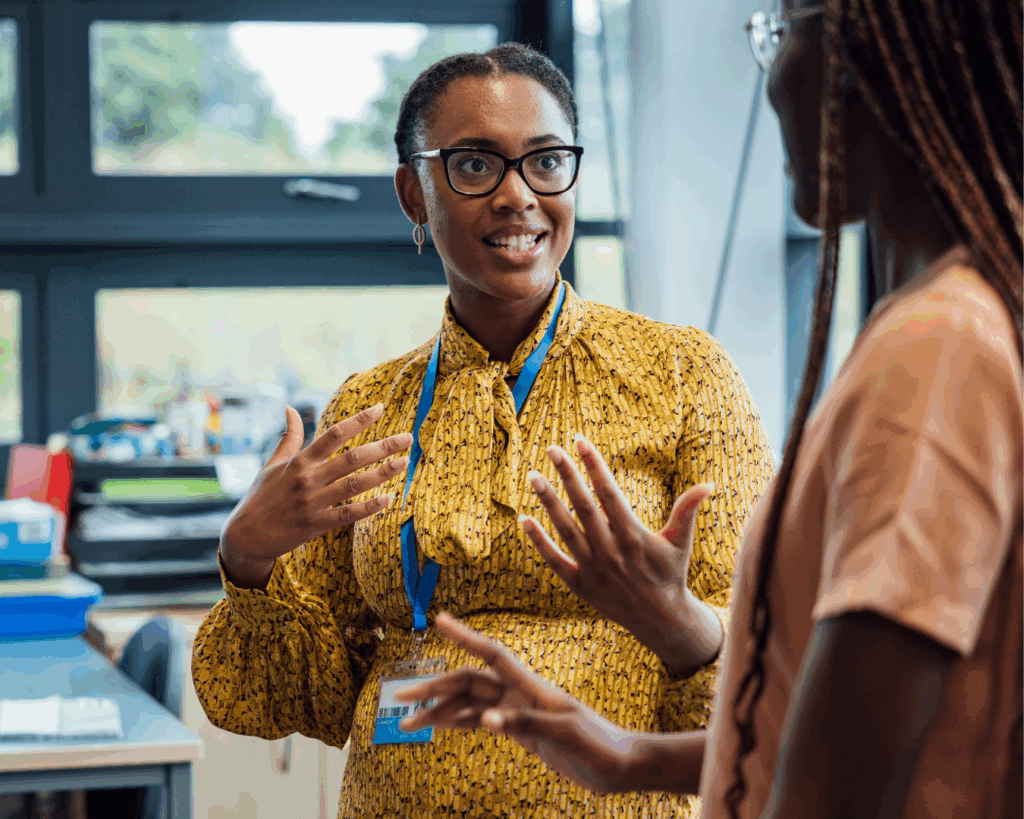
collaboration. Instead of teaching in isolation, faculty meet regularly within a cohort guided by a Course Coordinator. These conversations become a place to compare notes, troubleshoot challenges, and share insights about student learning. When one instructor discovers an effective way to explain recursion or build intuition around circuits, that practice doesn’t stay locked in a single classroom, it spreads across the course. In this way, the cohort functions as a genuine community of practice, tackling shared challenges together rather than individually.
This collaborative energy naturally supports better teaching. When faculty have access to strong shared materials, they aren’t spending hours recreating lecture slides or rewriting instructions for the third time. That recovered time creates room for deeper engagement with students and encourages pedagogical experimentation. Faculty can focus on refining feedback, piloting new interactive tools, or integrating real-world engineering applications that spark curiosity. Efficiency, in this model, isn’t about cutting corners, it’s about clearing space for the things that truly matter in learning.
Because cohort meetings allow faculty to track student performance trends across sections, instructors gain a clearer understanding of where students struggle and where they’re excelling. If several instructors notice that students are consistently stuck on a particular concept or design principle, the cohort can collectively revise the lesson plan or adjust the assessment. These small but meaningful changes add up, improving equity and reducing student confusion across the program.
Another practical strength of the model is the way it supports academic integrity. Shared assessment banks make it easier to rotate questions, build variation across sections, and reduce reliance on predictable exam patterns that circulate online. Coordinators can also use shared data to spot unusual patterns or gaps and propose revisions before the next term begins. In this model, integrity is baked into the structure.
Of course, no model is without challenges. Some faculty may be accustomed to full autonomy and hesitant to adopt a more collective approach. The transition requires clear communication, empathy, and time to build trust. Maintaining the Digital Foundation also requires ongoing attention to keep materials current and relevant. However, these challenges are manageable when faculty begin to see the benefits: increased support, reduced workload, and stronger alignment with colleagues. When implemented with respect for academic freedom, the model enhances rather than restricts what instructors bring into the classroom.
Although the model got its start in a Computer Science program at ASU, the applications have proven to be successful across disciplines. Any discipline with multiple sections can adapt this structure to their needs. The core idea remains the same: establish a shared foundation, create space for continuous conversation, and let the collective expertise of the faculty drive improvements. As a model for teaching and learning, it is both scalable and flexible.
Ultimately, the greatest strength of this approach lies in its humanity. Faculty want to feel connected, supported, and part of something meaningful. Students want clarity, consistency, and learning experiences that build logically from one course to the next. The cohort model brings these desires into alignment. It builds an environment where teaching feels less like a solitary endeavor and more like a collaborative craft.
As educators and members of a learning community, we all benefit from structures that help us work smarter and teach better. The cohort model nudges us toward a future where course design is not just an obligation but a shared opportunity to elevate the student experience. When we build courses together, we build stronger pathways for our learners, and stronger professional relationships with one another.
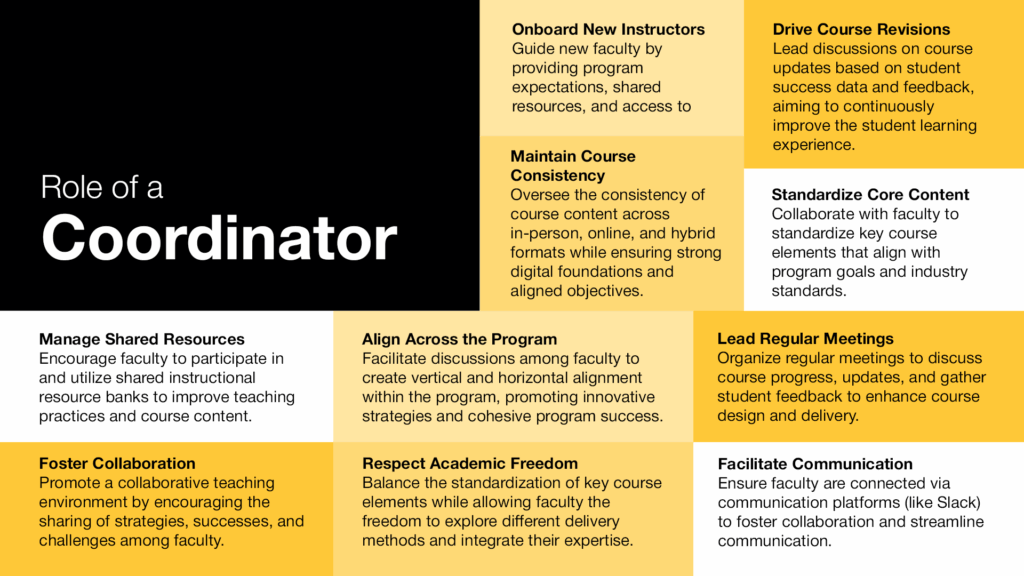
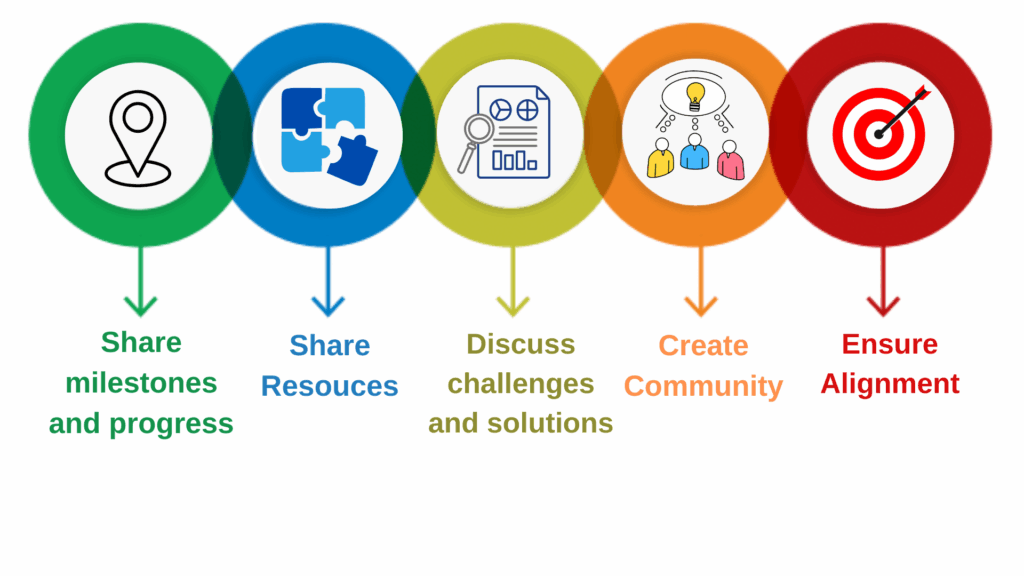
Image description: Role of a Coordinator. Manage Shared Resources: encourage faculty to participate in and utilize shared instructional resource banks to improve teaching practices and course content. Foster Collaboration: promote a collaborative teaching environment by encouraging the sharing of strategies, successes, and challenges among faculty. Onboard New Instructors: guide new faculty by providing program expectations, shared resources, and access. Maintain Course Consistency: oversee the consistency of course content across in-person, online, and hybrid formats while ensuring strong digital foundations and aligned objectives. Align Across the Program: facilitate discussions among faculty to create vertical and horizontal alignment within the program, promoting innovative strategies and cohesive program success. Respect Academic Freedom: balance the standardization of key course elements while allowing faculty the freedom to explore different delivery methods and integrate their expertise. Drive Course Revisions: lead discussions on course updates based on student success data and feedback, aiming to continuously improve the student learning experience. Standardize Core Content: collaborate with faculty to standardize key course elements that align with program goals and industry standards. Lead Regular Meetings: organize regular meetings to discuss course progress, updates, and gather student feedback to enhance course design and delivery. Facilitate Communication: ensure faculty are connected via communication platforms (like Slack) to foster collaboration and streamline communication.
For institutions ready to take the first step, implementation begins with a few manageable actions. Don’t try to do everything at once, rather identify a faculty member who already demonstrates leadership in a course and, if possible, offer them a stipend or course release as a way to signify the importance of the role and the attention it requires. Begin by doing an audit of current course materials, pulling scattered content into a single shared repository, and setting a regular meeting cadence. Even short regular meetings can help to create habits of collaboration and community. Keep the meetings supportive and inclusive of everyone’s materials, voices, and contributions. The emphasis should be on shared problem-solving and faculty autonomy. Next, try to find the quick wins that can create a sense of accomplishment and collaboration. Things like standardizing a confusing assignment, co-creating a reusable lab template, or agreeing on a common set of learning objectives. These small successes demonstrate the value of shared work early on and help the group move from concept to an operational, sustainable structure.
Lindsey Lewandowski Robinson, M.Ed., is a Learning Experience Designer with two decades of experience enhancing engagement and strengthening learning experiences across a variety of settings. She applies systems thinking strategies and empathetic relationship-building to support effective teaching and learning.